
Blog
Garth Brooks, Affordability and Community: Key Takeaways from the 2026 ULI Spring Meeting
May 14, 2026 | Violet PR
By: Dan Johnson, Account Director, Violet PR, and Co-Chair of Urban Land Institute Northern New Jersey
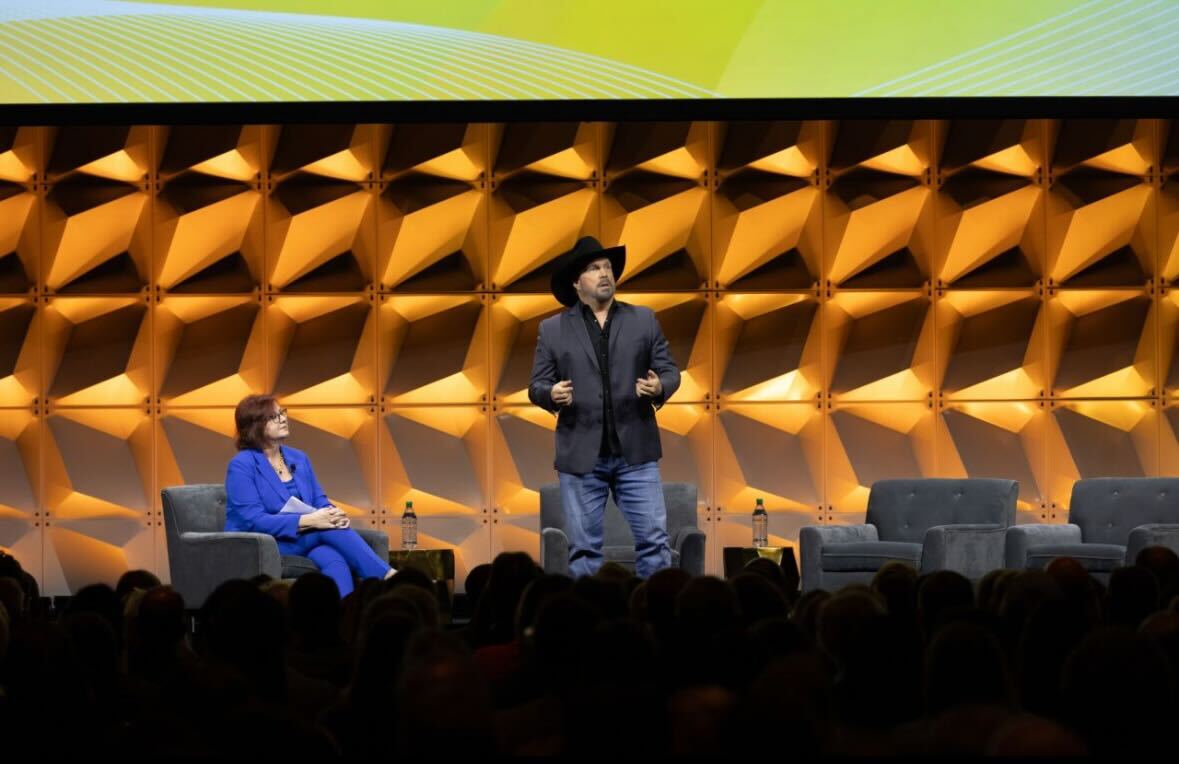
Surprise keynote speaker Garth Brooks delivered one of the most memorable lines at this year’s Urban Land Institute Spring Meeting to a crowd of 4,000 global real estate professionals in Nashville.
“Do you feel among people?”
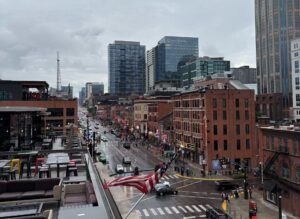
While Brooks is best known for his Grammy Award-winning music career and brief stint as Chris Gaines, he has also recently entered the commercial real estate world with the opening of Friends in Low Places Bar & Honky-Tonk along Nashville’s Broadway corridor. Using his experience with adding to the city’s impressive roster of honky-tonks as an analogy for development, Brooks argued that if someone walks into a space, feels nothing, meets no one and leaves easily, they will simply spend their money elsewhere.
That message resonated far beyond entertainment venues.
‘Affordability and Community’
Brooks’ message highlighted two connected themes woven into every panel and conversation this year: affordability and community. It is clear that the commercial real estate and economic development industries are increasingly recognizing that successful projects are no longer defined solely by location, scale or amenities. They are defined by experience.
To continue the Nashville analogy, spaces are the entertainers. Residents, workers and visitors are the crowd. Cities feed off people, and people feed off cities. It is a reciprocal relationship and needs to work in both directions for locations to succeed today.
Across panels and discussions, there was a growing emphasis on creating experiences through real estate rather than simply constructing buildings. How do people feel inside a space? What does the design encourage them to do? Does it create interaction, connection and belonging, or does it simply function as a place to sleep, shop or work?
This marks a shift for an industry that far too often has been focused on the “where” and “what” of development while overlooking the “how” and “why.” Yet those questions are becoming increasingly critical, not just for individual buildings but for entire districts, downtowns and regions competing for residents, workers and investment.
A Tool for Attracting & Retaining
Real estate today is now infrastructure. Through thoughtful and collaborative design, it can become a powerful tool for attracting and retaining people. But the community focus means that real estate and investment decisions can no longer be planned and conducted behind closed doors in investment committee meetings or private discussions with local officials. Collaboration must extend beyond developers and investors. Governments and communities at large increasingly want a role in shaping projects and ensuring they contribute positively to public life.
This ties back to a key piece of today’s development puzzle, whether it’s a new apartment building or a multi-billion-dollar manufacturing complex. Growing community opposition and NIMBYism are fundamentally reshaping how developers, companies and regions approach the development process. Increasingly, success depends not just on financial feasibility or site selection, but on whether communities feel included, informed and connected to the vision behind a project.
It has become important to recognize that community opposition to a specific project isn’t opposition to development at large. Community opposition often emerges when residents feel excluded from the process, feel imposed upon or unable to visualize how a project can improve their lives.
Navigating Opposition
This NIMBYism makes storytelling increasingly important. Communities need to understand not just what a project is, but what it does for them. How will it improve quality of life? What experiences will it create? How will it contribute to affordability, connectivity or opportunity?
If a development becomes genuinely beloved, the community will market it on its own. If it fails to integrate into the surrounding fabric, it becomes far more difficult to sustain public support.
Accessibility at the Fore
Related to the community topic, affordability was equally central to many discussions. Creating vibrant spaces means little if residents cannot realistically participate in them. Whether through housing, entertainment or public gathering spaces, the industry is increasingly confronting the need to create accessible pathways into community life.
That conversation extends beyond economics. Strong community design can also support broader public health and social resilience goals by encouraging interaction, reducing isolation and creating places where people genuinely want to spend time.
This year’s 2026 Urban Land Institute Spring Meeting reinforced a simple but increasingly important idea: the future of real estate is not just about building projects. It is about building places people want to belong to.
In the same way people gravitate toward a honky-tonk with the best music, atmosphere and energy, cities and developments must create experiences that make people want to stay, return and connect with others.
Public relations and storytelling will play a critical role in that mission by helping communities understand not just what is being built, but why it matters and how it will make people feel.
+++
Interested in learning more about how storytelling can help your space find its place? Reach out today to hello@violetpr.com and learn more about our approach!